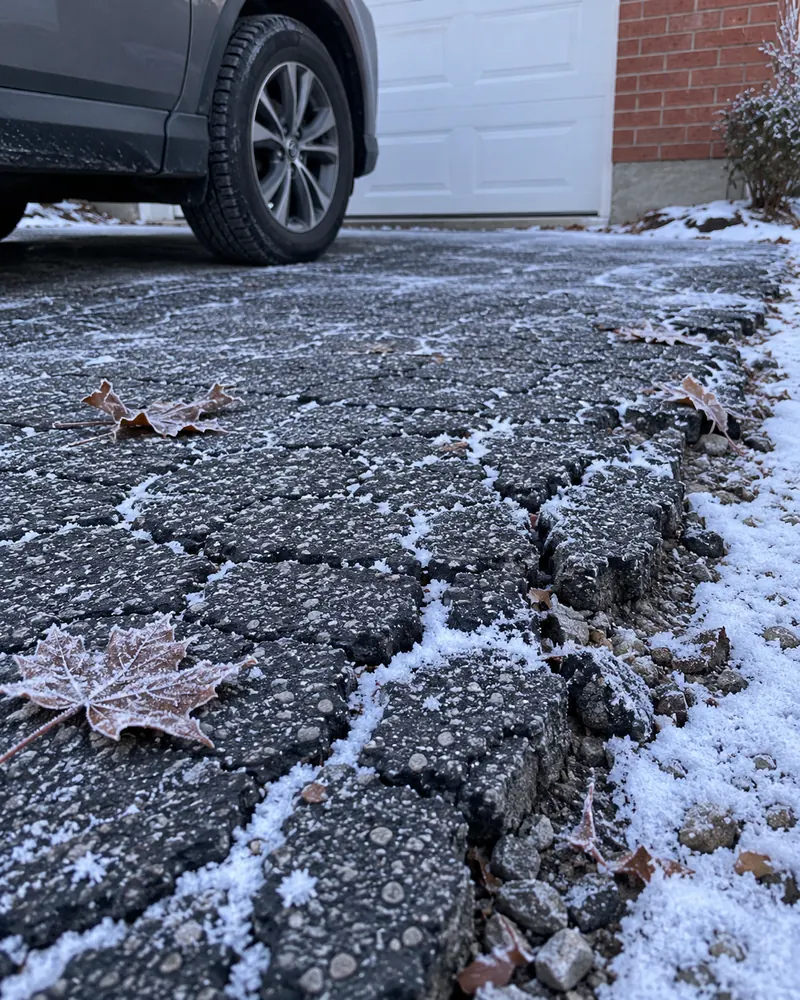
Paving advice
Asphalt driveways and Quebec winters
Snow removal, salt and freeze-thaw
What freeze-thaw cycles do to your asphalt driveway, which de-icer does the least damage, the right snow removal habits and what to repair in spring.
- Free quoteWe come take a look, no obligation.
- Clear priceEvery step spelled out in the quote.
- Hot asphaltLaid with a paver, rolled.
- Quick callbackThe owner, not a salesperson.
On this page
In Quebec, traffic isn’t what wears out an asphalt driveway: winter is. Freezing, thawing, salt, the snowblower and the plow do in a few months what ten summers wouldn’t. The good news is that most winter damage can be prevented with a few simple habits, and what remains repairs well, as long as you act in spring instead of waiting.
What freeze-thaw does to asphalt
Asphalt is a flexible material that sits on a stone base. As long as water stays on the surface and drains away, all is well. The trouble starts when it gets in.
Every crack, even a hairline one, lets water through. When the temperature drops below zero, that water freezes and expands. The crack widens by a hair. When it warms up, the ice melts, more water gets in, and the cycle starts again. Over one season, a region like the North Shore goes through dozens of these cycles. A crack the width of a coin in the fall can become a pothole by spring.
Below the surface, it’s even more serious. If water reaches the base and the base is poorly drained, it freezes in the stone and lifts the asphalt in slabs: that’s frost heave. When it thaws, the base turns soft and sinks under the weight of vehicles. The result: bumps in February, dips in April, and networks of cracks that tell you the base needs to be redone.
Salt, calcium, sand: which does the least damage
One thing needs saying first: healthy asphalt, well compacted and well drained, stands up to salt far better than concrete does. Salt doesn’t attack the bitumen directly. What it does is multiply freeze-thaw cycles by lowering the freezing point: salty water freezes, thaws and refreezes more often than pure water. On asphalt that is already cracked or porous, that speeds everything up.
- Road salt (sodium chloride). Effective and cheap, but it stops working in deep cold and ends up in your flower beds and your foundation.
- Calcium or magnesium chloride. Works at lower temperatures, in smaller quantities; gentler on plants, but still a de-icer that feeds freeze-thaw cycles.
- Sand or fine gravel. Doesn’t remove ice, but gives traction with no chemical effect at all. It’s the gentlest choice for asphalt and the most effective in deep cold.
Our recommendation for a residential driveway: clear snow early and often so ice doesn’t get a chance to form, reach for abrasive first, and save de-icer for stubborn patches of ice, in small amounts. On a freshly sealed driveway, the surface is smoother: add sand near the garage and on the slope.
Plow, snowblower, shovel: the right habits
The shovel. Choose a plastic blade or one with a rubber edge; a bare metal blade scrapes the bitumen and tears out aggregate on a driveway that is starting to age. Push the snow rather than scraping it.
The snowblower. Adjust the skid shoes so the auger doesn’t touch the surface. A properly adjusted snowblower is the gentlest tool there is for asphalt. A poorly adjusted one leaves parallel scratches you’ll notice in spring.
Contract snow removal. Ask your snow removal contractor to raise the blade and use shoes. The most common damage we see in Terrebonne and Mascouche comes from a tractor blade catching a curb or a weakened asphalt edge. If the edge of your driveway is fragile, point it out, or have it repaired before winter.
Commercial parking lots. Mark catch basins and curbs with stakes before the first snowfall; a plow that can’t see a catch basin breaks it. See our commercial paving page for planning a parking lot.
What not to do. Never break ice on asphalt with a pick or an axe. Don’t park a heavy vehicle in the same spot for the whole spring thaw. Don’t let a snowbank build up that melts all April long in the same place: it’s a constant source of water, exactly where you don’t want it.
Drainage: your best insurance
Everything above comes down to one idea: water that doesn’t stay doesn’t freeze. A driveway whose slope sends water to the street or a catch basin, with no dips or puddles, gets through winter almost unscathed. A driveway that holds water against the garage or in the middle of the surface deteriorates every year.
If you see puddles that linger after rain, or ice that always forms in the same spot, the slope or the base has a problem that sealer won’t fix. That calls for base correction or resurfacing with slope correction, to plan for paving season.
What to repair in spring
Once the snow is gone and the ground has finished thawing, walk around your driveway:
- New or widened cracks: seal them as soon as the surface is dry, before they work all summer.
- Potholes: clean cut, base recompacted, hot asphalt. Avoid cold patch as a permanent fix.
- Edges broken by the plow: repair with stone support.
- Sinking or heaving: that’s the base; an assessment is needed before choosing between repair, resurfacing and rebuilding.
- Greyed surface: if the structure is sound, a sealer in summer will bring back the black and get it ready for next winter.
Spring is also the best time to ask for a quote: paving dates book up early and you get to pick your moment. Our article 5 signs it’s time to redo your driveway helps you sort it out; the visit itself is free. Request your assessment and we’ll tell you honestly what winter left behind, and what can wait.
wintersnow removalmaintenancerepair
Written by the Asphalte Pro Québec team, asphalt paving contractor in Montreal, Laval and Terrebonne.
Go further.
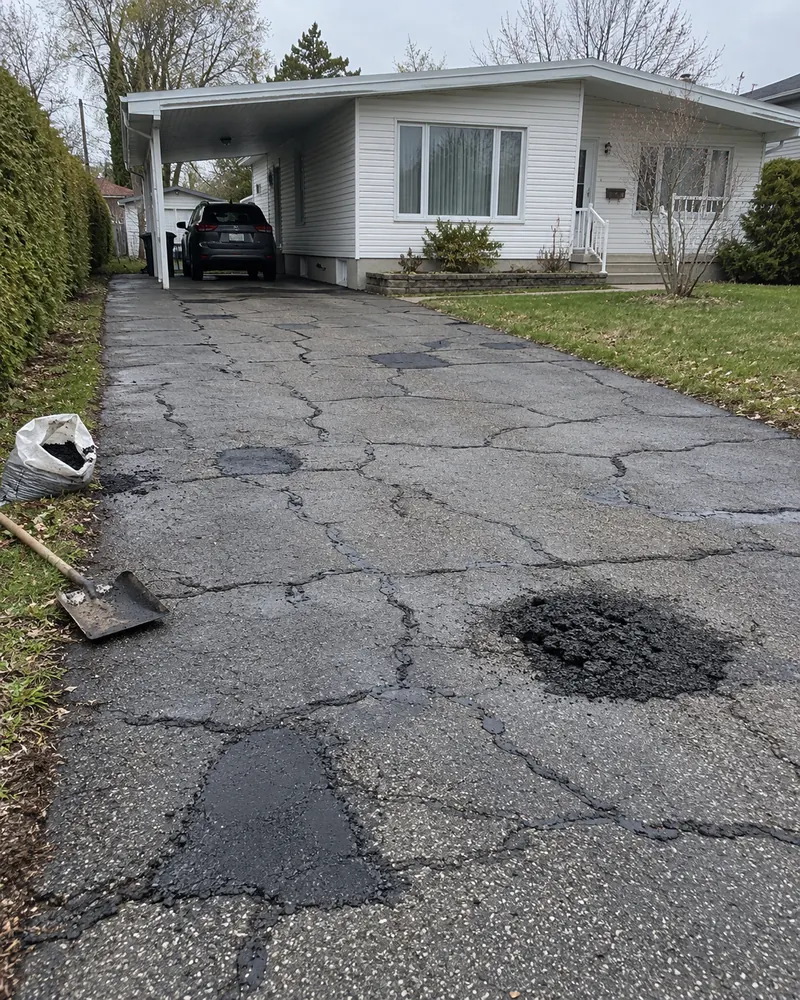
5 Signs It's Time to Redo (or Repair) Your Asphalt Driveway
Alligator cracks, sunken spots, puddles, grey colour, potholes: the 5 signs and the right fix (repair, seal, resurface or rebuild).
Read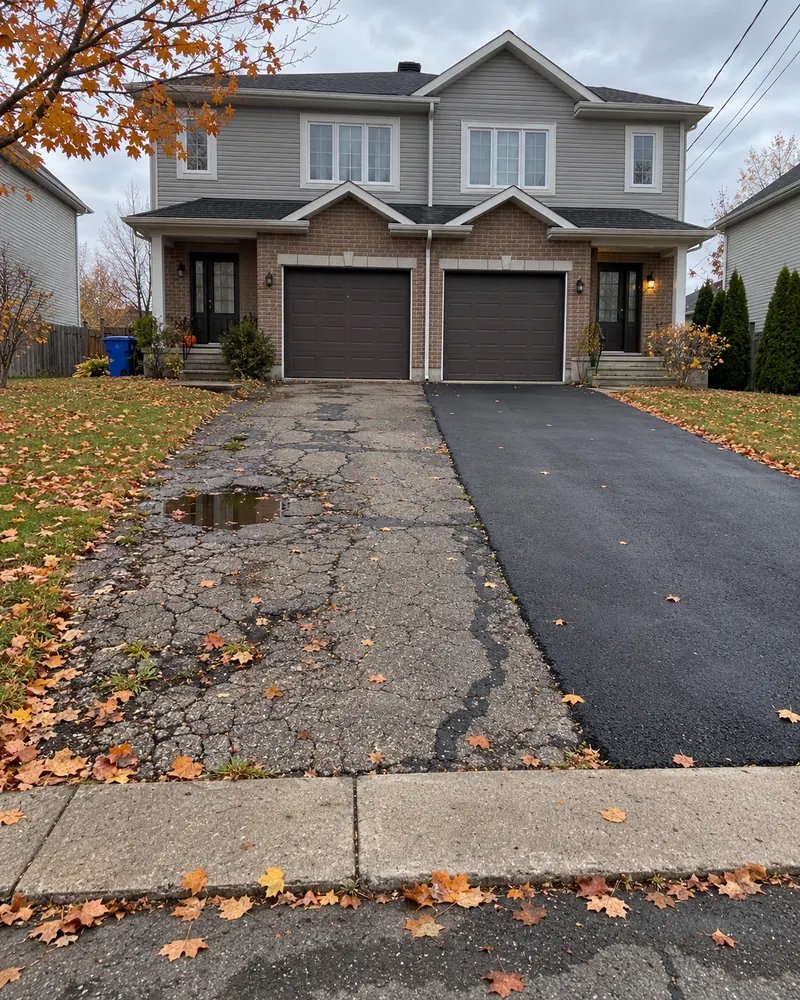
How Long Does an Asphalt Driveway Last in Quebec (and How to Extend Its Life)
Foundation, thickness, drainage, sealer: what determines the lifespan of an asphalt driveway in Quebec, the end-of-life signs, the mistakes to avoid.
Read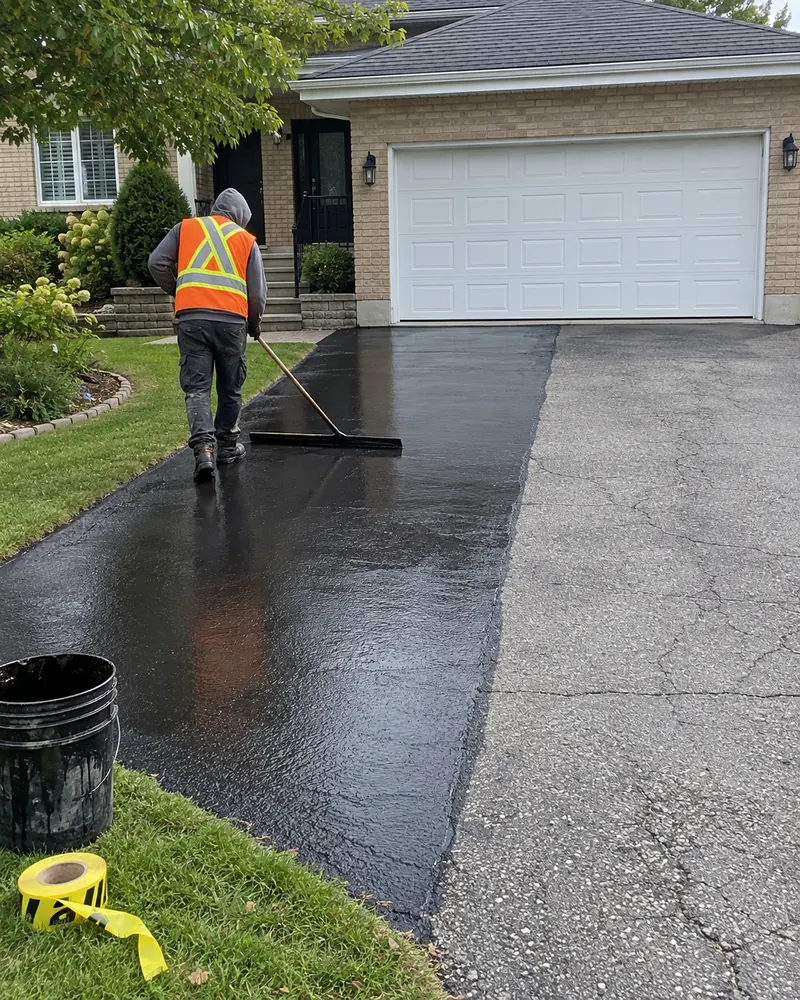
Is asphalt sealing worth it? What the evidence says
Sealer protects the surface but doesn’t strengthen the driveway. When it’s worth it, when it’s wasted money, what it costs ($0.30–0.45/ft² from a pro) and why coal tar has been banned since 2025.
ReadBefore the freeze, not next spring.
Two minutes of questions, or a photo by text. We call you back quickly, come take a look and you get your price, free.