Paving advice
How Long Does an Asphalt Driveway Last in Quebec (and How to Extend Its Life)
Foundation, thickness, drainage, sealer: what determines the lifespan of an asphalt driveway in Quebec, the end-of-life signs, the mistakes to avoid.
- Free quoteWe come take a look, no obligation.
- Clear priceEvery step spelled out in the quote.
- Hot asphaltLaid with a paver, rolled.
- Quick callbackThe owner, not a salesperson.
On this page
We would love to give you a number of years. Many websites do, and they all contradict each other, because the real answer is: it depends on what is under the asphalt, how much water gets into it and what you do in the first few years. Two driveways paved the same summer, on the same street in Terrebonne, can age in completely different ways. Here is what makes the difference, and what you control.
What determines lifespan: four factors
1. The foundation. This is the number one factor, and the only one that cannot be corrected after the fact without redoing everything. A crushed stone foundation, placed in layers and mechanically compacted at each layer, gives the asphalt a stable support that does not move with frost. A thin foundation, poorly compacted or laid on unprepared clay soil, settles in places, and the asphalt, which is only a surface layer, follows the movement: low spots, puddles, network cracks. Our excavation and foundation page explains what we do below the surface.
2. The thickness of compacted asphalt. A layer that is too thin cracks under load and lets water through faster. What counts is the thickness after compaction, not the “laid” thickness: that is the one that must be stated in your quote. A parking lot with truck traffic requires more than a residential driveway.
3. Drainage. Water that sits on the asphalt ends up in it, then under it. A proper slope toward the street or a catch basin, with no low spots, is what protects the foundation during freeze-thaw cycles. A driveway that holds water against the garage ages fast, whatever the quality of the paving.
4. Traffic and use. A driveway where two cars park ages differently from one where a delivery truck or a travel trailer manoeuvres. Wheels turned while stopped in extreme heat, trailer jacks without a load-spreading plate, heavy loads always in the same spot: all of this marks the asphalt.
On top of these four factors comes the quality of the installation itself: hot asphalt at the right temperature, laid with a paving machine for uniform thickness, compacted with a roller without delay. Asphalt that cools before compaction stays porous, and porous asphalt drinks water.
The role of sealer
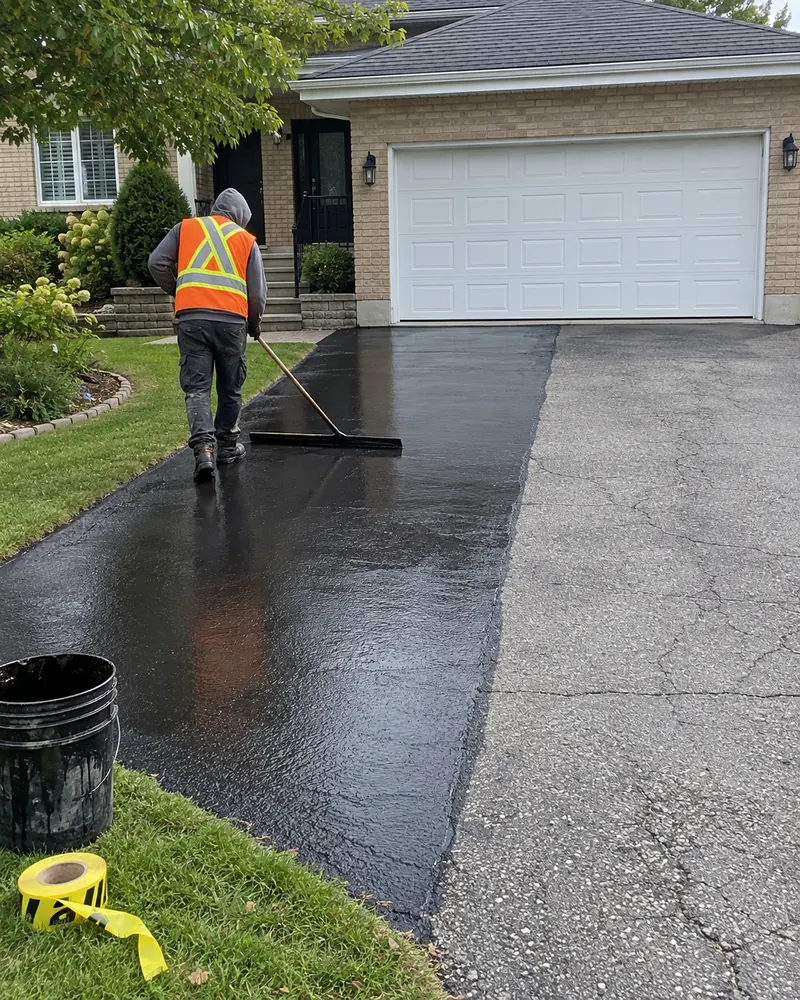
Sealer does not make a driveway stronger: it protects it against what wears it down. The sun oxidizes the bitumen and makes it brittle; water gets into the pores and freezes; salt multiplies the freeze-thaw cycles; oil dissolves the binder. A sealer applied at the right time (never on new asphalt that has not finished curing, never on a dirty surface) slows all of this down.
The right rhythm is not a date on a calendar, it is the condition of the surface: when the black turns grey and water no longer beads, it is time. Sealing too often does more harm than good. Our guide Asphalt sealer: when, how and how often gives the details.
The end-of-life signs
A driveway at the end of its life is recognized not by its age but by its symptoms. Here they are, from least to most serious:
- Grey surface, loose aggregate. The protection is gone; the structure is often still good. A cleaning, crack filling and a sealer take care of it.
- Isolated cracks. They can be filled. Left open, they become potholes after a few winters.
- Crumbling edges. Lack of lateral support; repairable.
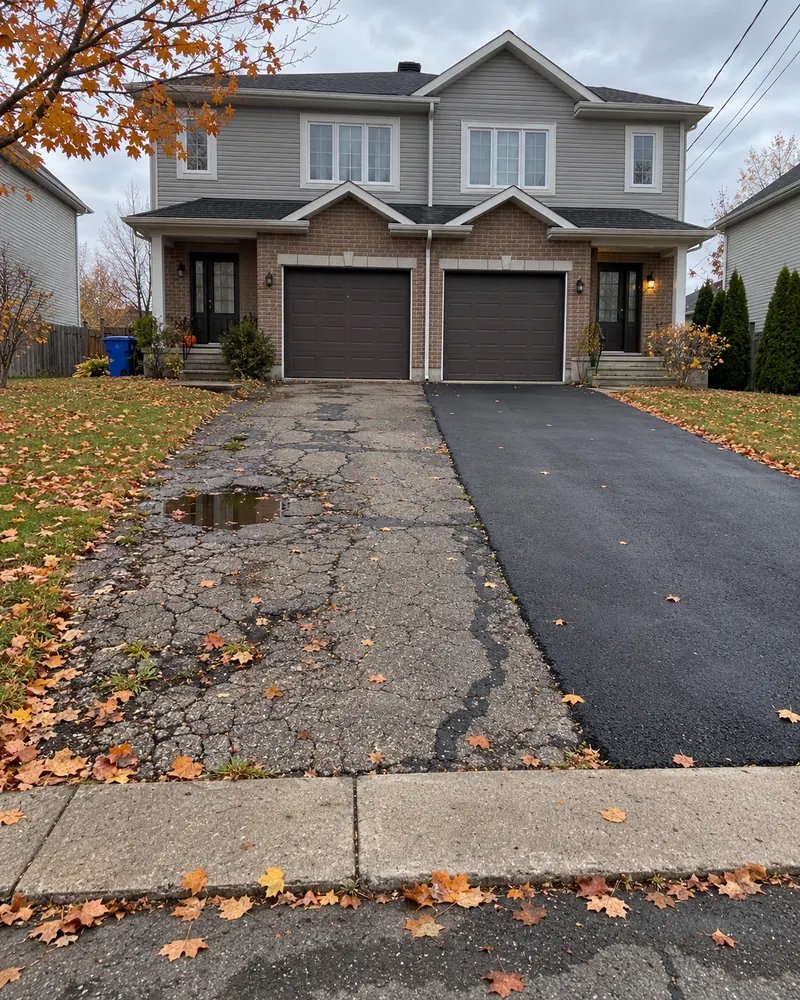
- Persistent puddles and sunken areas. The foundation is moving; you are entering the territory of resurfacing with local correction, or of rebuilding.
- Network cracks (alligator skin) over a wide area. The base has failed. No sealer or resurfacing will fix this for good: it is a rebuild.
Our article 5 signs it is time to redo your driveway describes each one with the matching solution.
The mistakes that shorten a driveway’s life
Some are made during construction, others in everyday use. The most common:
- Paving over a base that moves, or adding a layer over a sunken driveway to “buy a few years”. You pay twice.
- Accepting an unspecified thickness in the quote. “One asphalt driveway” is not a specification.
- Sealing new asphalt too early, before it has cured.
- Leaving cracks open all winter. Every freeze cycle widens them.
- Turning the wheels while stopped in very hot weather, especially the first season.
- Clearing snow with a bare metal blade or a poorly adjusted snowblower, which tear up the surface.
- Letting water stand against the garage, under a downspout that empties directly onto the asphalt, or in a low spot you have been noticing for years.
- Patching a pothole with a cold-mix product thinking it is permanent. It is a bandage, useful while you wait for a hot-mix repair.
None of these mistakes shows on the day of paving. All of them show after a few winters. That is why we keep repeating that a paving job is judged after five winters, not on the day it is laid.
When resurfacing resets the clock
If the foundation is sound and only the surface is worn, resurfacing (a new layer of hot asphalt over the existing one, after preparation) gives you a new surface without excavation. Because the base has already been stabilized by the years, the result ages like a new driveway, at a fraction of the cost of a rebuild and often in a single day.
The condition is strict: the base must be sound. On a sunken driveway or one with network cracks, resurfacing reproduces the defects within the first few winters. That is why we always assess it before proposing it, and why we will tell you no if it is not the right option. Our article Resurfacing or rebuilding explains how we decide.
What you control, in short
You control neither frost nor salt. (If you are still deciding between two materials, our comparison asphalt or paving stones also covers lifespan.) You control three things: the choice of a compacted foundation and a stated thickness at the time of paving; drainage, by correcting any low spot as soon as it appears; and maintenance (filling cracks before winter, sealer at the right time, gentle snow removal).
Want to know where your driveway stands and how much life it has left? The visit is free in Montreal, Laval, Terrebonne and on the North Shore. Request your assessment: we will tell you honestly whether it needs a sealer, a repair, a resurfacing, or nothing at all for now.
lifespanmaintenancesealcoatingfoundation
Written by the Asphalte Pro Québec team, asphalt paving contractor in Montreal, Laval and Terrebonne.
Go further.
Is asphalt sealing worth it? What the evidence says
Sealer protects the surface but doesn’t strengthen the driveway. When it’s worth it, when it’s wasted money, what it costs ($0.30–0.45/ft² from a pro) and why coal tar has been banned since 2025.
Read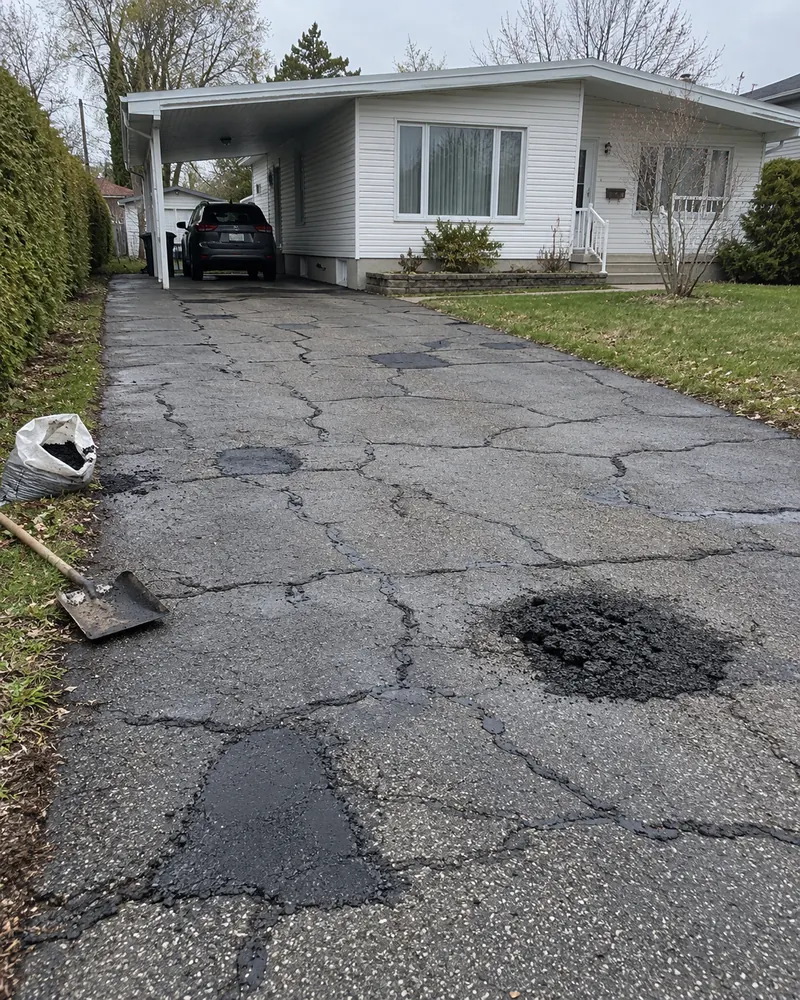
5 Signs It's Time to Redo (or Repair) Your Asphalt Driveway
Alligator cracks, sunken spots, puddles, grey colour, potholes: the 5 signs and the right fix (repair, seal, resurface or rebuild).
Read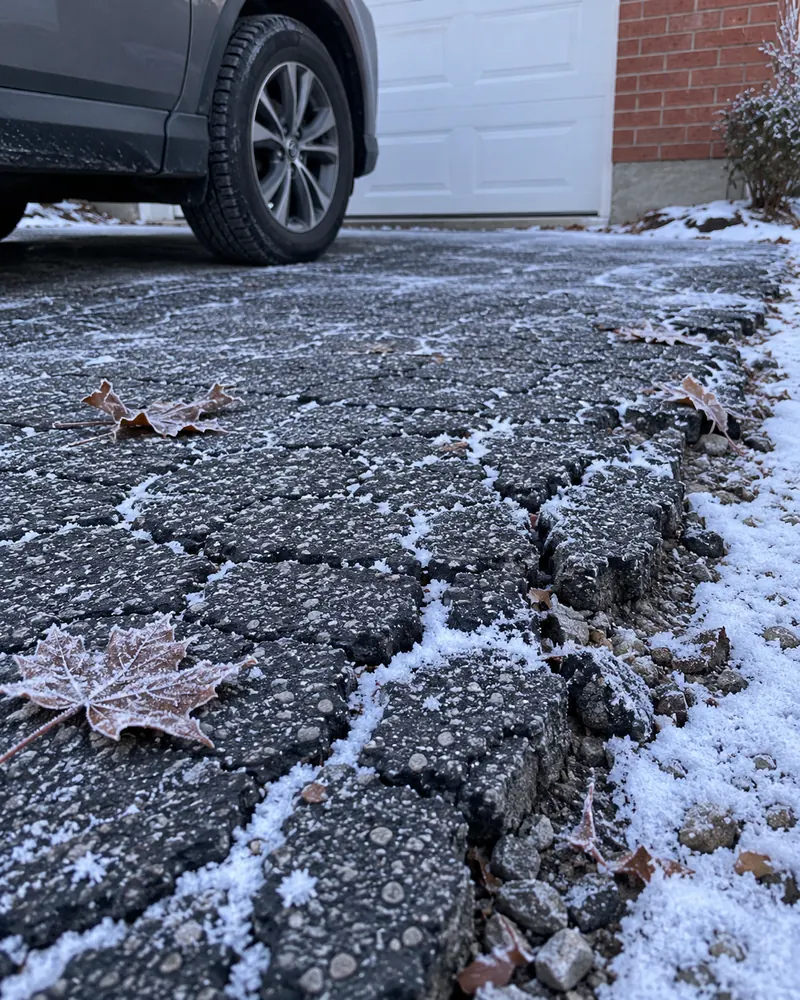
Asphalt driveways and Quebec winters: snow removal, salt and freeze-thaw
What freeze-thaw cycles do to your asphalt driveway, which de-icer does the least damage, the right snow removal habits and what to repair in spring.
ReadBefore the freeze, not next spring.
Two minutes of questions, or a photo by text. We call you back quickly, come take a look and you get your price, free.