Service · Sealcoating
Asphalt sealcoating in Montréal and Laval
Protect your driveway from water, salt and sun, and get back that first-day black
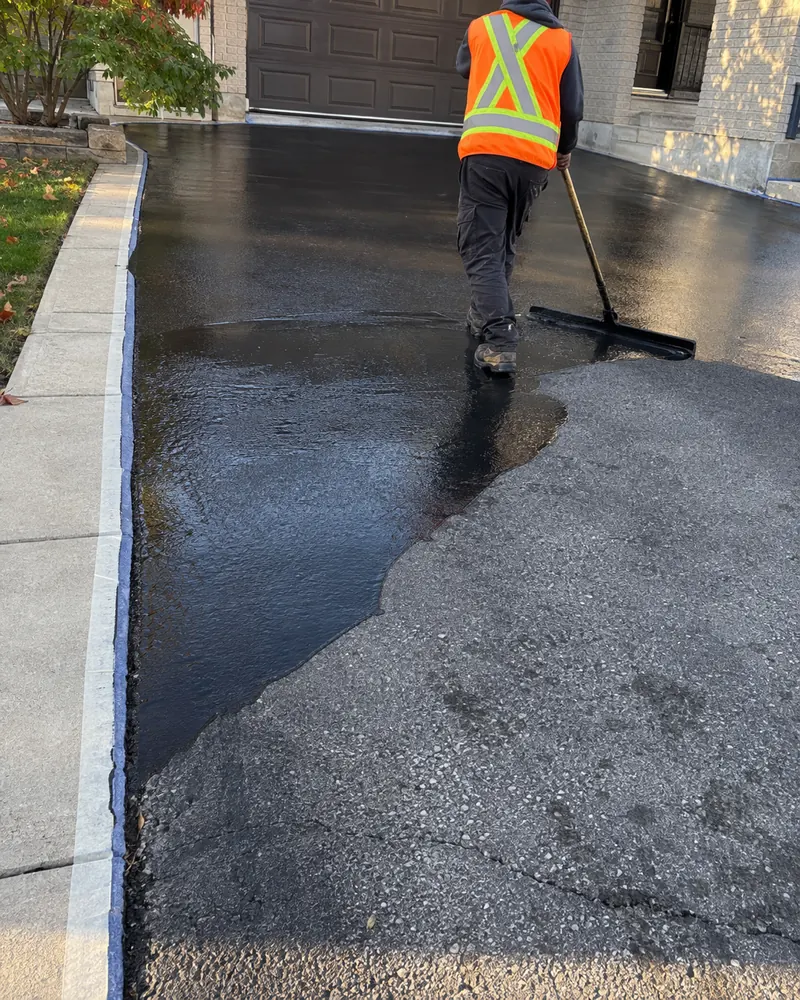
A protective coat applied to a prepared surface, blocking what wears asphalt down and giving it back its new look.
- Free quoteWe come take a look, no obligation.
- Clear priceEvery step spelled out in the quote.
- Hot asphaltLaid with a paver, rolled.
- Quick callbackThe owner, not a salesperson.
On this page
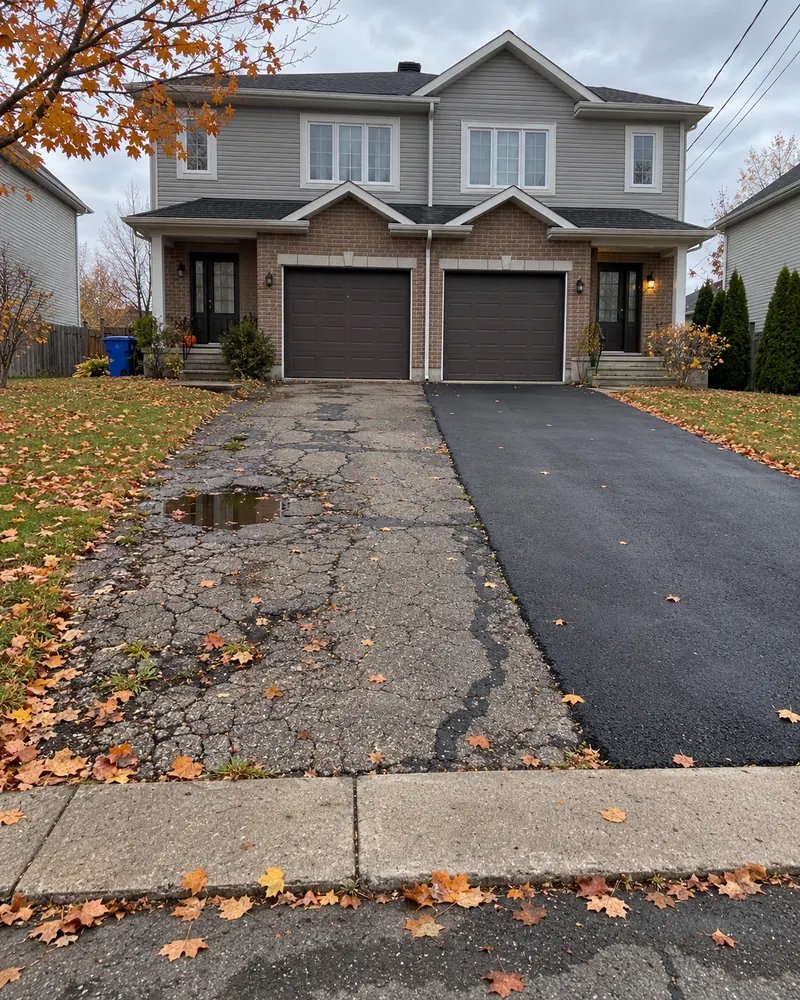
Your driveway is turning grey, water no longer beads on it, hairline cracks are appearing. It’s not a structural problem yet, but it’s the doorway to the next one. De-icing salt, oil and UV attack asphalt from the first year, and a surface that’s no longer protected ages much faster than a sealed one.
Sealer forms a protective barrier that slows oxidation, keeps water from seeping into hairline cracks and gives your driveway back its deep black.
We prepare the surface (cleaning, crack filling, treating oil stains) before applying a commercial-grade sealer in one or two coats depending on the condition of the asphalt.
Ideal for
- Recent asphalt driveway (first protection)
- Greyish, dull asphalt
- Commercial parking lots (regular maintenance)
- After a repair, to even out the look
What changes the price
In 2026, professional sealcoating costs about $0.30 to $0.45 per square foot, with a minimum around $265. Here is what moves your quote. See 2026 prices and the calculator.
- The area to cover, measured on site.
- The number of coats needed: a surface that’s still black and tight needs fewer than one that’s grey and porous.
- The preparation: how many cracks to fill, oil stains to treat, how much cleaning is needed.
- Access and the shape of the driveway: edges, curves and transitions take more squeegee work.
Everything that affects the price of paving
The mistakes we often see
- Sealing new asphalt too soon: it hasn’t finished curing, and the sealer traps the oils instead of protecting.
- Applying it to a dirty or damp surface: the sealer doesn’t bond and peels off in sheets by the following winter.
- Sealing over open cracks without filling them: water keeps getting in, under a nice black coat.
- Driving on it before it has finished drying: permanent tire marks.
The concrete benefits
- You push back the next big expense. Sealer applied at the right time, on a prepared surface, slows oxidation and water infiltration, the two causes that lead to reconstruction.
- Your driveway looks new by the next day. Deep, uniform black: the difference shows from the street, and it’s the first thing a visitor (or a buyer) notices.
- Done properly, not just “rolled on” over top. Cleaning, crack filling, oil stain treatment, then one or two coats depending on the condition. Sealer applied to a dirty surface peels within a winter; ours goes on a surface that’s ready.
- Fast and affordable. One day of work, ready to use the next day.
How we proceed, step by step
- Surface cleaning (blowing, brushing, degreasing)
- Crack filling and oil stain treatment
- Sealer application (1 or 2 coats) by squeegee or sprayer
- Drying 24 to 48 h, then back in service
About this service
How often should sealer be applied?
Every 3 to 5 years for a residential driveway, more often for a high-traffic parking lot.
Can a new driveway be sealed right away?
No: you need to wait 6 to 12 months for the new asphalt to finish curing before the first application.
Does sealer make asphalt slippery?
A commercial-grade sealer, applied correctly, doesn’t make the surface slippery once dry. Some products contain an anti-slip additive, useful on slopes. We choose the product for your driveway and specify it in the quote.
How long before I can drive on it?
Allow 24 to 48 h of drying depending on temperature and humidity before parking a car on it. We confirm the exact wait on the day of application, and we advise against turning the wheels while stopped for the first few days.
Sealcoating: in your city.
North Shore
Les Moulins and Lanaudière
Go further.
How Long Does an Asphalt Driveway Last in Quebec (and How to Extend Its Life)
Foundation, thickness, drainage, sealer: what determines the lifespan of an asphalt driveway in Quebec, the end-of-life signs, the mistakes to avoid.
Read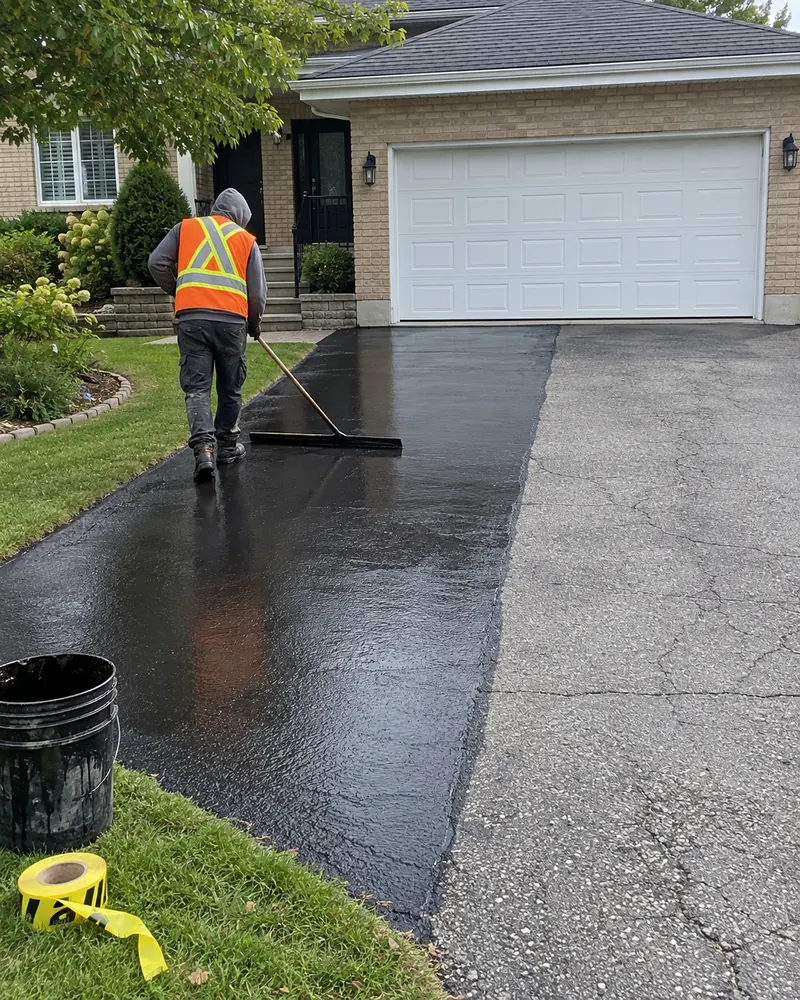
Is asphalt sealing worth it? What the evidence says
Sealer protects the surface but doesn’t strengthen the driveway. When it’s worth it, when it’s wasted money, what it costs ($0.30–0.45/ft² from a pro) and why coal tar has been banned since 2025.
Read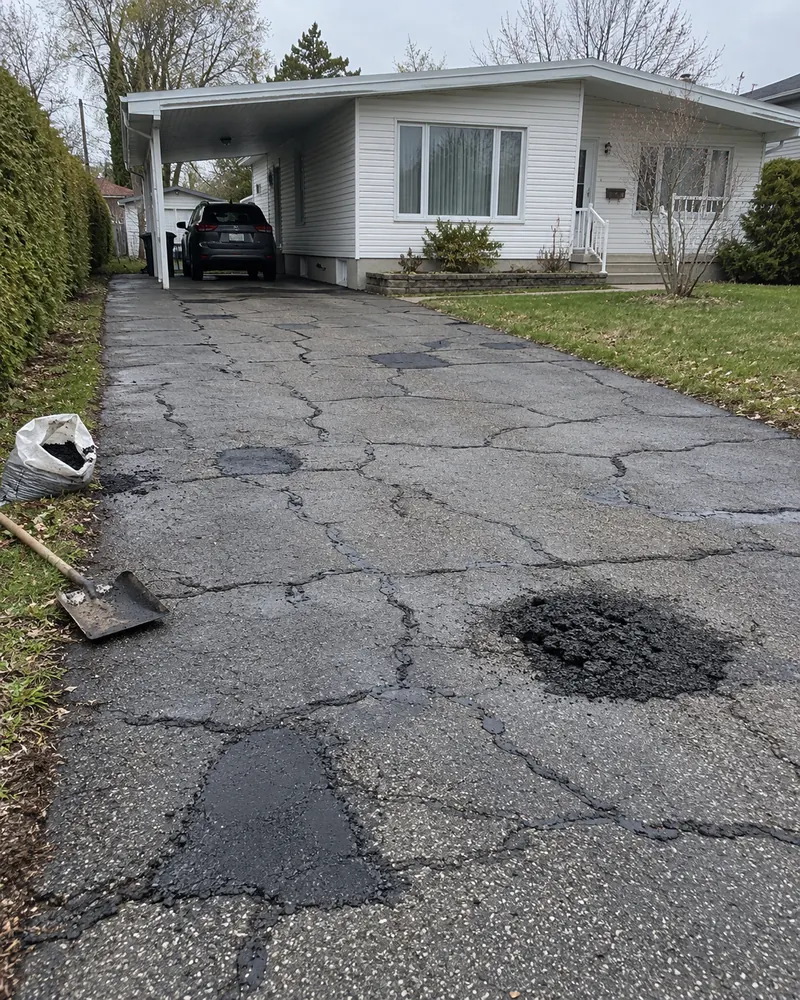
5 Signs It's Time to Redo (or Repair) Your Asphalt Driveway
Alligator cracks, sunken spots, puddles, grey colour, potholes: the 5 signs and the right fix (repair, seal, resurface or rebuild).
ReadBefore the freeze, not next spring.
Two minutes of questions, or a photo by text. We call you back quickly, come take a look and you get your price, free.